Big batteries are now outcompeting gas in the grid – and gas-rich Western Australia is at the forefront
From The Conversation (12/12/25)…
Big batteries are now outcompeting gas in the grid – and gas-rich Western Australia is at the forefront
Australia’s electricity grids are undergoing a profound transformation. Solar and wind have provided 99% of new generating capacity since 2015. Last month, renewables hit parity with fossil fuels for the first time.
But there’s a lesser-known part to the story. Renewable output varies, which means they need to be backed up. For years, authorities have predicted gas power stations would remain necessary to back up or “firm” renewables. But increasingly, this work is being done instead by large-scale batteries.
Grid batteries have rapidly moved from a supporting role to prime time by firming renewables, ramping up output very rapidly and boosting system security by ensuring a stable voltage. Battery capacity in the pipeline has soared from 3 gigawatts in 2022 to 26GW in 2025 in Australia’s main power grid, the National Electricity Market.
Batteries can soak up a glut of solar and release it back to the grid during evenings. It’s nowhere more visible than in isolated Western Australia, which has its own separate power grids.
In recent months, renewables (largely solar) have begun supplying more than half (55%) of the electricity to WA’s Wholesale Electricity Market. Batteries are increasingly overtaking large-scale solar and gas generation in meeting peak demand.
As grid operators grow more comfortable with the capabilities of grid batteries, it will become less necessary to burn gas for power. One of the world’s top gas exporters is now demonstrating how to avoid using this fossil fuel.
Batteries coming of age
The latest plans from the Australian Energy Market Operator show battery storage is anticipated to keep growing sharply.
The market operator anticipates Australia will need 14GW of gas power capacity by 2050. Gas will shift from firing up at times of peak demand to act largely as a backup for renewables and storage.
But even this role isn’t certain. The plunging cost of grid-scale batteries means gas and even hydropower will struggle to compete over the next ten years. Other analysts have come to similar conclusions.
Western Australia, global testbed
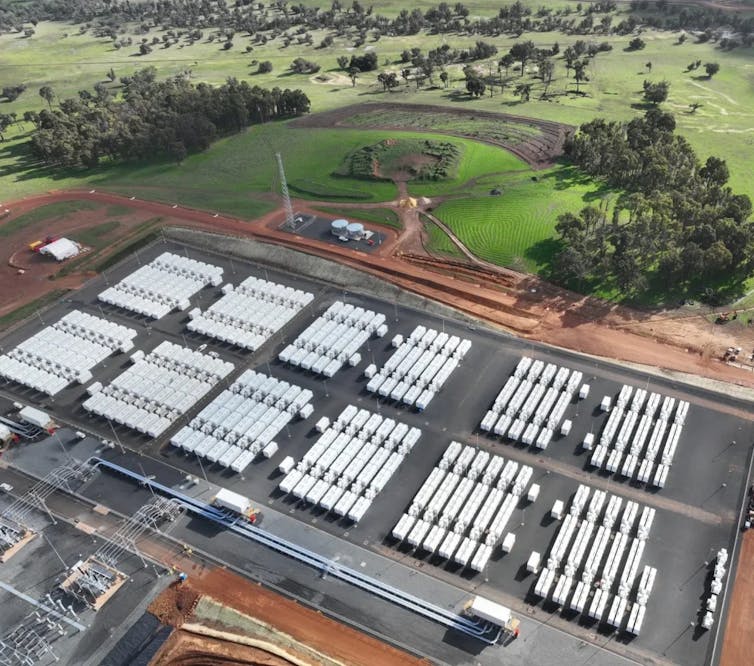
WA has taken up batteries at remarkable speed. Major new systems have been deployed in Kwinana, an industrial area of Perth, and the coal town of Collie. Collectively, these grid batteries have more than 5 gigawatt-hours of storage.
These batteries supplied more than 20% of evening peak demand and surpassing gas generation sources in a recent week.
Throughout November, renewables provided 55% of power to WA’s main grid, well above the National Energy Market’s 50%. What’s impressive is this was achieved without using hydropower or drawing power from other states. The system relied on rooftop solar, solar farms, wind and batteries.
The first two stages of the Collie battery are now up and running. The project could expand further.Neoen
Overseas, states such as California have been using batteries with significant success. And, WA is showing how it can be done without interconnections.