New ban on dangerous rodent poisons is lifeline for our native animals
From The Conversation (13/3/26)…
New ban on dangerous rodent poisons is lifeline for our native animals
We’ve just had an epic win for our native animals, such as owls, goannas and eagles. And after years contributing to the scientific evidence on the wildlife impact of rodent poisons, it’s a day scientists like myself feared would never come.
This means that some commonly used rat baits will be taken off the shelf at supermarkets and hardware shops. These baits can have a devastating effect on native animals, which receive lethal or crippling doses when they eat poisoned rats and mice.
Let’s look at what these rodent poisons (or rodenticides) are, why they are lethal for wildlife, and why they needed to banned.
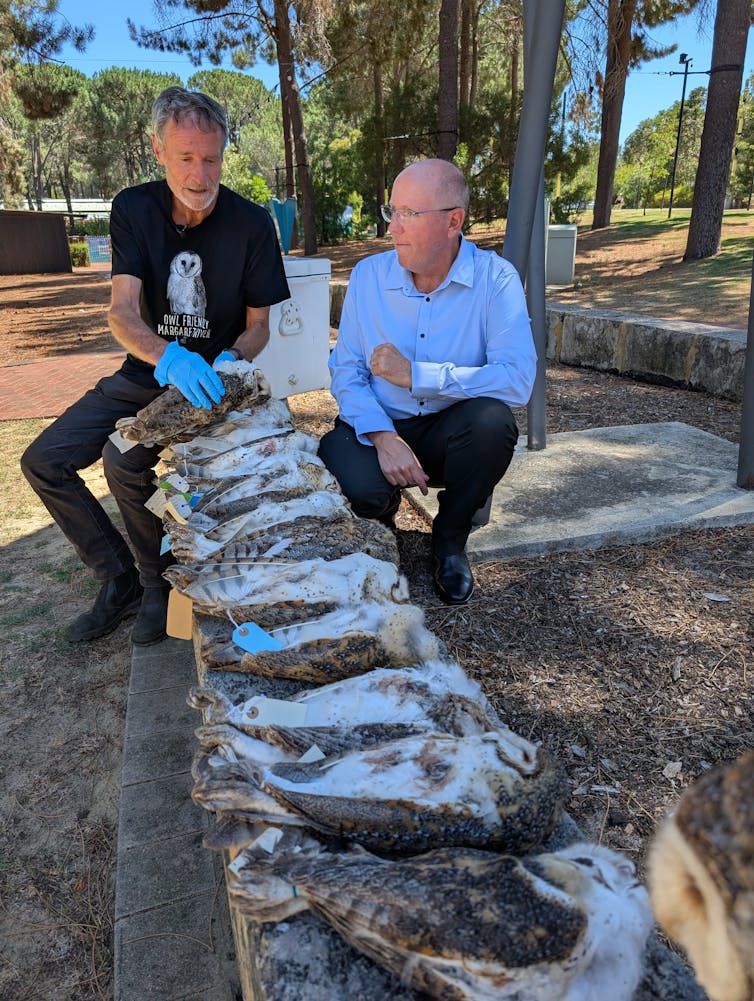
Dr Boyd Wykes (left) and Associate Professor Rob David look at dead owls poisoned by rodenticides.Karen Majer, CC BY-ND
What’s wrong with “second generation” rodent poisons?
Rat and mouse baits are an essential part of everyday life – people use them without thinking. Most baits are anticoagulants, which stop the blood coagulating or clotting and cause animals to bleed to death…